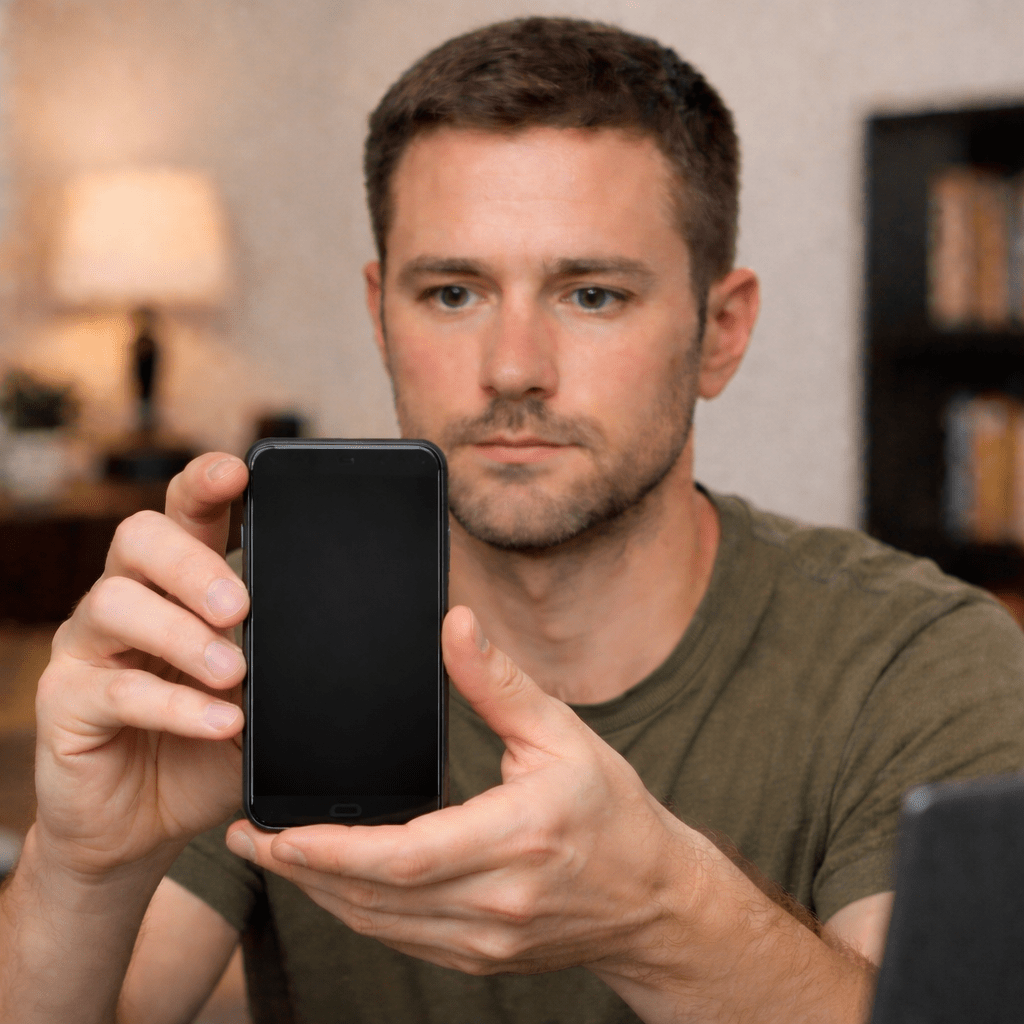
When people think of truth verification, they usually picture the traditional polygraph instrument with its sensors, blood-pressure cuff, and examiner-guided testing process. The polygraph remains an important and widely used tool, but newer options now give clients another path. One of the most promising is VerifEye, a mobile app-based truth verification system that uses a smartphone to measure involuntary ocular or eye behavior rather than relying on the full array of sensors used in a standard polygraph examination. According to “Converus,” VerifEye is designed for both iOS and Android devices, can be self-administered, and is built to complete testing in about 10 minutes compared to several hours with a polygraph instrument.
One major benefit of VerifEye is convenience. A traditional polygraph examination usually involves a pre-test interview, chart collection, and analysis, and it requires specialized instrumentation and a trained examiner to conduct the session in person. The American Polygraph Association explains that a modern polygraph uses multiple sensors to record respiration, electrodermal activity, cardiovascular activity, and sometimes movement or other validated measures. By contrast, VerifEye is specifically designed for mobile use and can be taken almost anywhere, making it much easier for people who are not located near a testing office or who need a more flexible scheduling option.
Another benefit is speed and scalability. Traditional polygraph testing can be highly effective, but it is more time- and labor-intensive. VerifEye was built to automate much of the process and reduce the need for travel, office time, and setup. “Converus” states that VerifEye tests can be either self-administered or proctored, work many different languages, and are intended to lower the costs, while increasing access. For businesses, attorneys, investigators, treatment providers, or private clients, that can make a real difference when quick answers are needed or when multiple people must be screened efficiently.
VerifEye also offers an advantage in client comfort. Many people feel anxious about being physically connected to a polygraph instrument, even when they are telling the truth. Since VerifEye uses a phone camera and measures involuntary eye behavior such as pupil dilation, eye movements, blinks, and fixations, some clients may find the process less intimidating and easier to complete. Plus, the VerifEye examination, when self-administered, is conducted in a comfortable environment. All of this may improve cooperation and make the experience feel more modern and approachable.
That said, VerifEye should not be seen as a blanket replacement for every polygraph examination. The polygraph remains a structured, sensor-based testing method with long-established professional standards, and in some matters an examiner-led process and post-test interview may still be the better choice. Even “Converus” states that EyeDetect technologies and polygraph are different tools, and that both are viable solutions depending on the need.
For many modern clients, the real advantage of VerifEye is that it expands access to credibility assessment. It offers a faster, more flexible, and more accessible option for situations where traditional polygraph testing may be impractical. At clearlenstruthservices.com, that means more ways to help clients pursue answers when truth matters most.
 CLEAR LENS TRUTH SERVICES
Leave a comment